
Table of Contents
- What Is SEO?
- Why SEO Matters in 2026
- How Search Engines Work
- Types of SEO
- Keyword Research for Beginners
- On-Page SEO Basics
- Technical SEO Explained
- Importance of High-Quality Content
- Link Building Strategies
- Mobile SEO Optimization
- Common SEO Mistakes to Avoid
- Best SEO Tools for Beginners
- Future of SEO in 2026
- Conclusion
- FAQs
What Is SEO?
SEO for Beginners starts with understanding the meaning of SEO. SEO stands for Search Engine Optimization, which is the process of improving a website so it ranks higher on search engines like Google.
When people search for information online, search engines display the most relevant and useful pages. SEO helps your website appear in those search results and attract organic traffic without paying for advertisements.
For businesses, bloggers, and websites like digigospirit.in, SEO is one of the most powerful digital marketing strategies for long-term growth.

Why SEO Matters in 2026
The online world is becoming more competitive every year. Millions of websites are fighting for visibility, and SEO helps businesses stand out from the competition.
Benefits of SEO
Increases Organic Traffic
SEO helps bring visitors naturally from search engines. Organic traffic is highly valuable because users are already searching for related topics or services.
Builds Website Authority
Websites that rank higher are often considered more trustworthy and reliable by users.
Improves User Experience
Modern SEO focuses heavily on user satisfaction, fast loading speed, and mobile-friendly design.
Cost-Effective Marketing
Unlike paid ads, SEO can continue generating traffic for months or even years after publishing content.
SEO for Beginners is essential because understanding basic SEO principles can completely change the growth of a website.
How Search Engines Work
Search engines use advanced algorithms to discover, analyze, and rank websites.
Three Main Processes
Crawling
Search engine bots scan websites and collect information about pages and content.
Indexing
After crawling, the pages are stored in a database called an index.
Ranking
Search engines evaluate hundreds of ranking factors to decide which pages should appear first in search results.
Important ranking factors include:
- Content quality
- Keyword optimization
- Website speed
- Mobile responsiveness
- Backlink authority
- User experience
- Internal linking
Understanding these basics is important in every SEO for Beginners guide.
Types of SEO
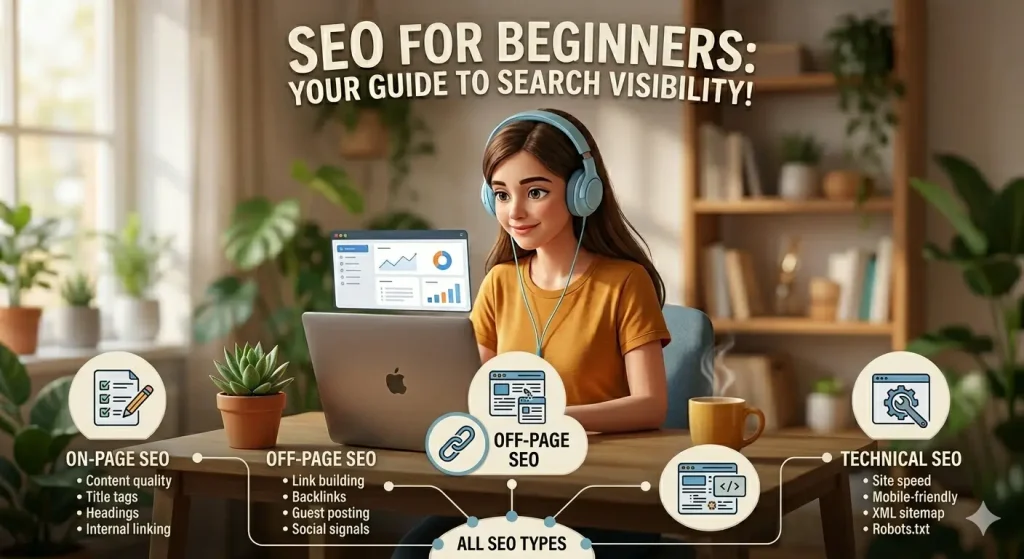
SEO is divided into multiple categories, and each plays a major role in website optimization.
On-Page SEO
On-page SEO focuses on optimizing content and website pages.
Examples include:
- Title tags
- Meta descriptions
- Heading structure
- Keyword placement
- Internal linking
Off-Page SEO
Off-page SEO improves website authority through backlinks and brand mentions.
Examples include:
- Guest posting
- Link building
- Social sharing
Technical SEO
Technical SEO improves website performance and indexing.
Examples include:
- XML sitemaps
- Website speed
- Mobile optimization
- HTTPS security
For SEO for Beginners, learning all three types creates a strong SEO foundation.
Keyword Research for Beginners
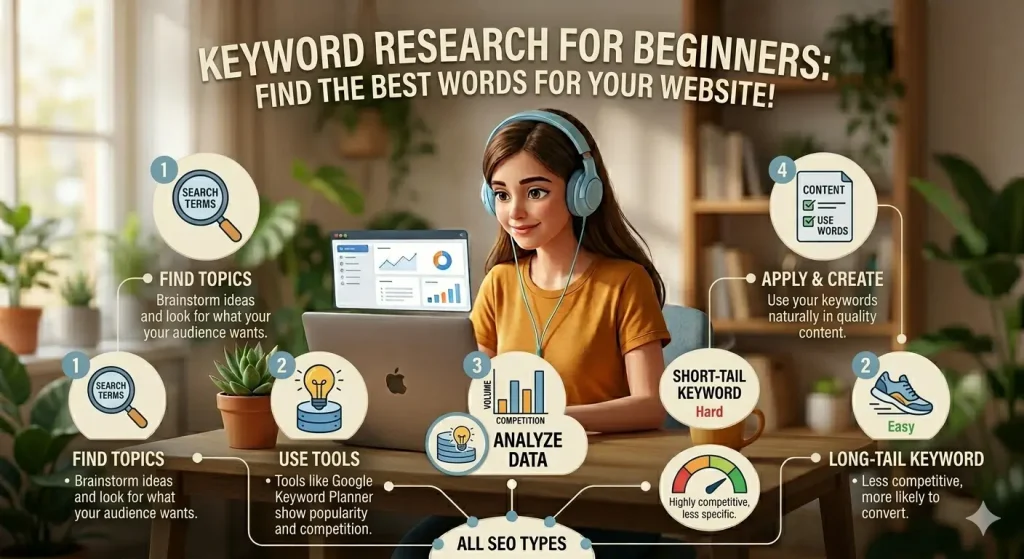
Keyword research is one of the most important SEO skills. It helps identify what users are searching for online.
What Are Keywords?
Keywords are words or phrases people type into search engines.
Examples:
- SEO for Beginners
- SEO tips
- Google ranking strategies
- Website SEO optimization
Types of Keywords
Short-Tail Keywords
Broad search terms with high competition.
Example:
- SEO
Long-Tail Keywords
Specific phrases with lower competition and better conversion potential.
Example:
- SEO for Beginners: Step-by-Step Guide
Long-tail keywords are extremely important because they help smaller websites rank faster.
Keyword Research Tips
- Focus on search intent
- Use low-competition keywords
- Analyze competitors
- Include question-based keywords
- Add LSI keywords naturally
LSI keywords related to SEO for Beginners include:
- search engine optimization
- SEO tutorial
- website ranking tips
- beginner SEO guide
- SEO traffic growth
On-Page SEO Basics
On-page SEO helps search engines understand your content better.
Optimize Title Tags
Your title should:
- Include the focus keyword
- Use emotional or power words
- Stay within recommended character limits
Example:
SEO for Beginners: Complete Guide to Rank Higher in 2026
Write Engaging Meta Descriptions
Meta descriptions improve click-through rates by encouraging users to visit your page.
Use Proper Headings
Content should use:
- H1 for the main title
- H2 for major sections
- H3 for subtopics
Add Keywords Naturally
Avoid keyword stuffing. Instead, place keywords naturally within:
- Introduction
- Headings
- Main content
- Conclusion
Optimize Images
Use:
- Compressed image sizes
- Relevant filenames
- Alt text with keywords
These simple strategies make SEO for Beginners easier to implement.
Technical SEO Explained
Technical SEO improves how search engines crawl and index your website.
Website Speed Optimization
Slow websites hurt rankings and increase bounce rates.
Improve Speed By:
- Compressing images
- Using caching
- Reducing unnecessary scripts
- Choosing fast hosting
Mobile-Friendly Design
Most users now browse websites on mobile devices. Responsive design is essential.
HTTPS Security
Secure websites build trust and improve rankings.
XML Sitemap
A sitemap helps search engines discover your pages quickly.
Fix Broken Links
Broken links create a poor user experience and hurt SEO performance.
Technical optimization is a major part of SEO for Beginners because it supports overall ranking performance.
Importance of High-Quality Content
Content is the backbone of SEO. Search engines prioritize content that is useful, informative, and engaging.
Characteristics of Quality Content
Original
Avoid duplicate or copied content.
Helpful
Answer user questions clearly.
Readable
Use short paragraphs, bullet points, and headings.
Updated
Refresh older content regularly.
Optimized
Add keywords naturally without overusing them.
High-quality content increases:
- User engagement
- Search rankings
- Backlinks
- Website authority
For SEO for Beginners, creating valuable content consistently is one of the most powerful ranking strategies.
Link Building Strategies
Backlinks are links from other websites pointing to your site. They act as trust signals for search engines.
Why Backlinks Matter
High-quality backlinks improve:
- Domain authority
- Search rankings
- Organic traffic
- Brand visibility
Effective Link Building Methods
Guest Posting
Write articles for industry-related blogs.
Create Shareable Content
Infographics, guides, and case studies attract natural backlinks.
Internal Linking
Connect your blog posts together to improve website structure.
Outreach Campaigns
Reach out to bloggers and website owners for collaboration opportunities.
SEO for Beginners should always include basic link-building knowledge because backlinks remain an important ranking factor.
Mobile SEO Optimization
Mobile SEO is critical in 2026 because mobile traffic dominates the internet.
Mobile SEO Best Practices
Responsive Design
Your website should adjust automatically to different screen sizes.
Fast Mobile Speed
Optimize loading speed for smartphones and tablets.
Readable Content
Use clear fonts and proper spacing.
Avoid Intrusive Popups
Too many popups negatively affect user experience.
Search engines now use mobile-first indexing, meaning they primarily evaluate the mobile version of your website.
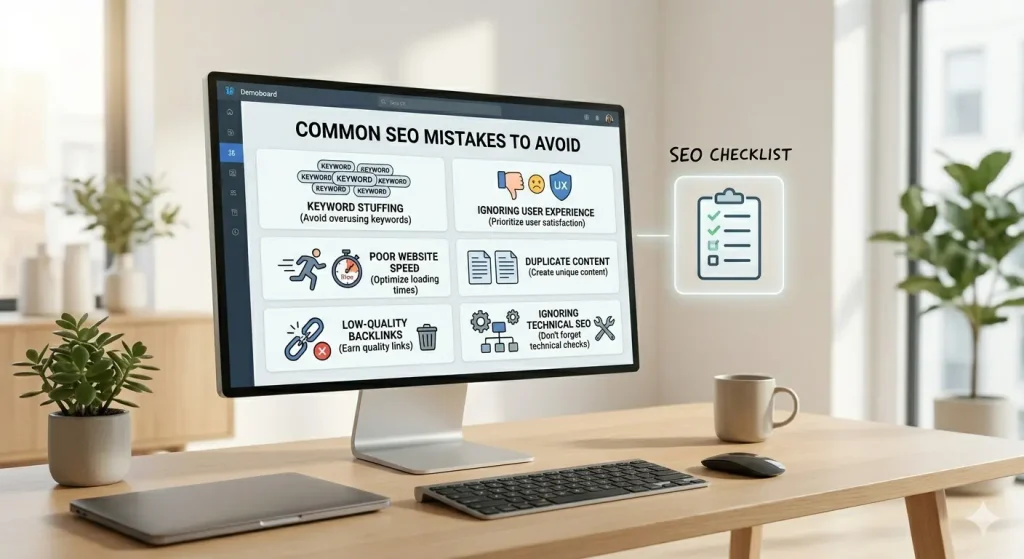
Common SEO Mistakes to Avoid
Many beginners make SEO mistakes that slow down website growth.
Keyword Stuffing
Using keywords excessively makes content look unnatural.
Ignoring User Experience
SEO is no longer only about keywords. User satisfaction matters greatly.
Poor Website Speed
Slow websites lose visitors quickly.
Duplicate Content
Copied content can hurt rankings badly.
Low-Quality Backlinks
Spammy backlinks may lead to penalties.
Ignoring Technical SEO
Without proper technical optimization, rankings can suffer even with good content.
Avoiding these mistakes makes SEO for Beginners more effective and sustainable.
Best SEO Tools for Beginners
SEO tools help analyze website performance and improve optimization strategies.
Popular SEO Tools
Google Analytics
Tracks website visitors and user behavior.
Google Search Console
Monitors website indexing and keyword performance.
Ahrefs
Useful for backlink analysis and keyword research.
SEMrush
Provides complete SEO analysis and competitor insights.
Ubersuggest
Beginner-friendly keyword research tool.
These tools help beginners understand SEO performance and identify improvement opportunities.
Future of SEO in 2026
SEO for beginners continues evolving with artificial intelligence and changing search behaviors.
Emerging SEO Trends
AI-Powered Search
Search engines are becoming smarter at understanding user intent.
Voice Search Optimization
More users are searching using voice assistants.
User Experience Signals
Search engines prioritize websites with better engagement and usability.
Visual Search
Image-based search is growing rapidly.
Content Authority
Websites that cover topics in depth perform better than thin-content websites.
Understanding future trends helps SEO for Beginners stay competitive in the digital landscape.
For more interesting content, go to seo for beginners

Conclusion
SEO for Beginners may seem complicated at first, but mastering the basics can lead to long-term online success. By focusing on keyword research, content quality, technical SEO, backlinks, and user experience, websites can achieve higher search rankings and steady organic traffic growth.
For websites like digigospirit.in, SEO provides an excellent opportunity to build authority, attract targeted visitors, and grow consistently without depending entirely on paid advertisements.
The key to successful SEO is consistency. Publish valuable content regularly, optimize every page carefully, and continue learning as search engine algorithms evolve. Over time, these efforts can significantly improve visibility, traffic, and business growth.
FAQs
What is SEO for Beginners?
SEO for Beginners is the process of learning basic Search Engine Optimization techniques to improve website rankings on search engines like Google. It includes keyword research, content optimization, technical SEO, and link building.
How long does SEO take to show results?
SEO usually takes around 3 to 6 months to show noticeable results, depending on competition, keyword difficulty, website authority, and content quality.
What are the main types of SEO?
The three major types of SEO are:
- On-Page SEO
- Off-Page SEO
- Technical SEO
All three work together to improve website rankings and user experience.
Is SEO better than paid advertising?
SEO provides long-term organic traffic and sustainable growth, while paid ads generate quick but temporary traffic. Both strategies can work together for better digital marketing results.
Why are backlinks important in SEO?
Backlinks act as trust signals for search engines. High-quality backlinks improve:
- Website authority
- Search rankings
- Organic traffic
- Online credibility
Can I do SEO without coding knowledge?
Yes, beginners can learn and implement basic SEO without coding skills. Many modern website platforms and SEO plugins make optimization easier.
Does mobile optimization affect SEO?
Yes, mobile optimization is a major ranking factor because search engines use mobile-first indexing. A mobile-friendly website improves user experience and search rankings.
Pingback: AI in Digital Marketing Trends 2026: Start Growing Fast