
Table of Contents
- Introduction
- What is a Content Marketing Strategy?
- Why Content Marketing is Important in 2026
- Step-by-Step Content Marketing Strategy for 2026
- Content Marketing Trends in 2026
- Common Mistakes to Avoid
- Pro Tips for Faster Growth
- FAQs
- Conclusion
Introduction
In 2026, building a strong online presence is no longer optional—it’s essential. Whether you’re a beginner, blogger, or business owner, having a solid content marketing strategy can be the difference between getting ignored and getting results.
A well-planned strategy helps you attract the right audience, build trust, and convert visitors into loyal customers. In this guide, you’ll learn a step-by-step content marketing strategy for 2026 that actually works.
What is a Content Marketing Strategy?
A content marketing strategy is a structured plan for creating, publishing, and distributing valuable content to attract and engage your target audience.
Instead of directly selling, you provide useful information that solves problems. This builds trust—and trust leads to conversions.
Example:
- Blog posts
- YouTube videos
- Social media content
- Email newsletters
The goal is simple: Give value first, sell later.
For more interesting go to Content marketing strategy

Why Content Marketing is Important in 2026
The digital space is more competitive than ever. People don’t want ads—they want solutions.
Here’s why content marketing matters:
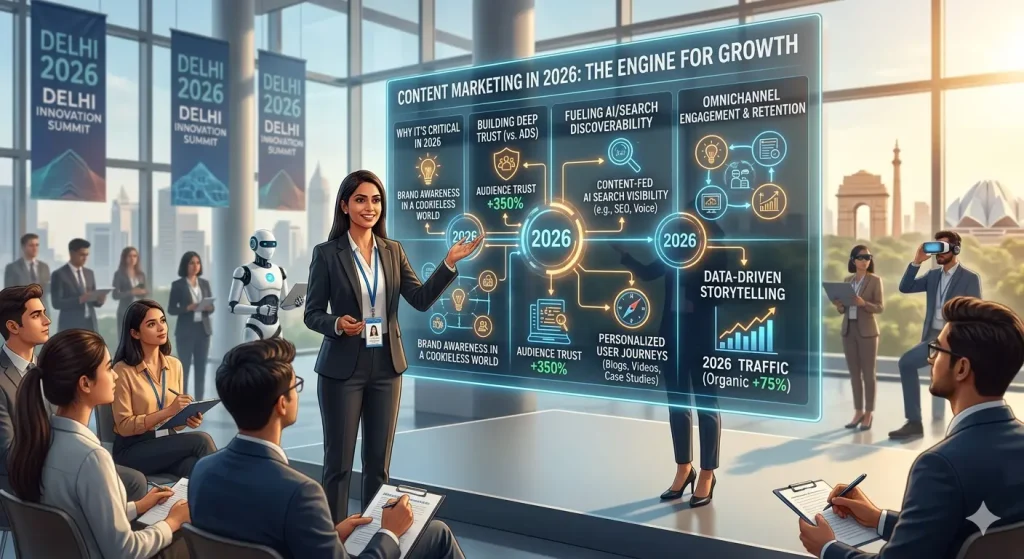
1. Builds Trust & Authority
People trust brands that educate them. Consistent content makes you an expert in your niche.
2. Drives Organic Traffic
SEO-optimized content brings free traffic from search engines like Google.
3. Generates Quality Leads
Good content attracts the right audience—people already interested in your offer.
4. Improves Conversions
Educated customers are more likely to buy.
Step-by-Step Content Marketing Strategy for 2026
Let’s break down a proven framework you can follow:
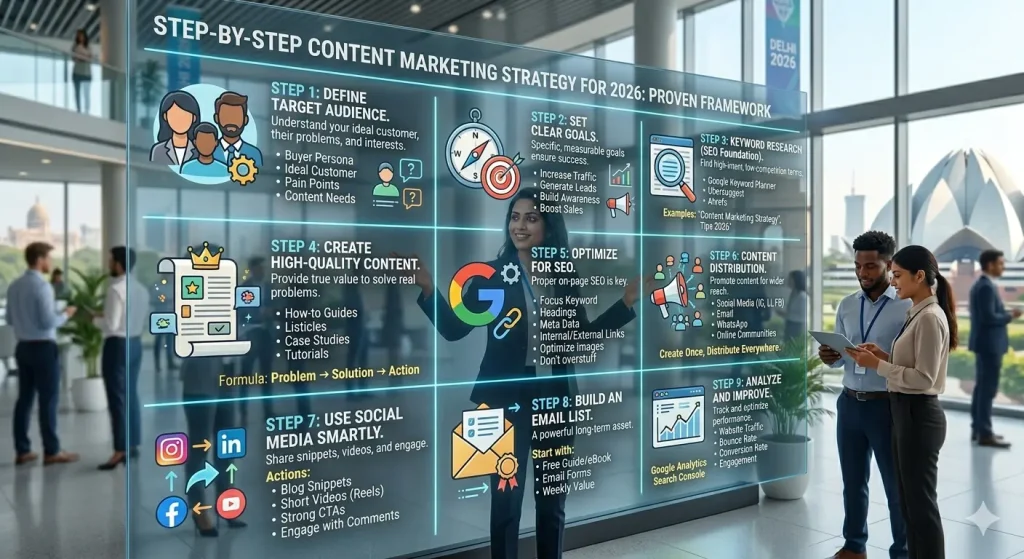
Step 1: Define Your Target Audience
Before creating content, understand who you’re targeting.
Ask yourself:
- Who is my ideal customer?
- What problems do they face?
- What content do they consume?
Pro Tip:
Create a buyer persona (age, interests, goals, pain points).
Step 2: Set Clear Goals
Without goals, your strategy will fail.
Examples:
- Increase website traffic
- Generate leads
- Build brand awareness
- Boost sales
Make sure your goals are specific and measurable.
Step 3: Keyword Research (SEO Foundation)
Keyword research is the backbone of content marketing.
Find keywords like:
- Content marketing strategy
- Content marketing tips 2026
- How to grow business with content
Tools You Can Use:
- Google Keyword Planner
- Ubersuggest
- Ahrefs
Focus on low competition + high intent keywords.
Step 4: Create High-Quality Content
Content is king—but valuable content is the real king.
Types of content that work in 2026:
- How-to guides
- Listicles
- Case studies
- Tutorials
Content Formula:
Problem → Solution → Action
Always solve a real problem.
Step 5: Optimize for SEO
To rank on Google, you need proper SEO.
Key SEO Elements:
- Use focus keyword in title, headings, and content
- Write engaging meta title & description
- Add internal and external links
- Optimize images with alt text
Don’t overstuff keywords—keep it natural.
Step 6: Content Distribution
Creating content is not enough—you must promote it.
Best Channels:
- Social media (Instagram, LinkedIn, Facebook)
- Email marketing
- WhatsApp groups
- Online communities
Rule: Create once, distribute everywhere.
Step 7: Use Social Media Smartly
Social media is a powerful traffic source.
Strategy:
- Share snippets of your blog
- Use reels/short videos
- Add strong CTAs
- Engage with comments
Focus on platforms where your audience is active.
Step 8: Build an Email List
Email marketing is still one of the highest ROI channels.
How to Start:
- Offer a free guide or ebook
- Use email capture forms
- Send weekly valuable content
Your email list = your long-term asset.
Step 9: Analyze and Improve
Tracking performance is crucial.
Metrics to Track:
- Website traffic
- Bounce rate
- Conversion rate
- Engagement
Tools:
- Google Analytics
- Google Search Console
Improve what works, fix what doesn’t.
Content Marketing Trends in 2026
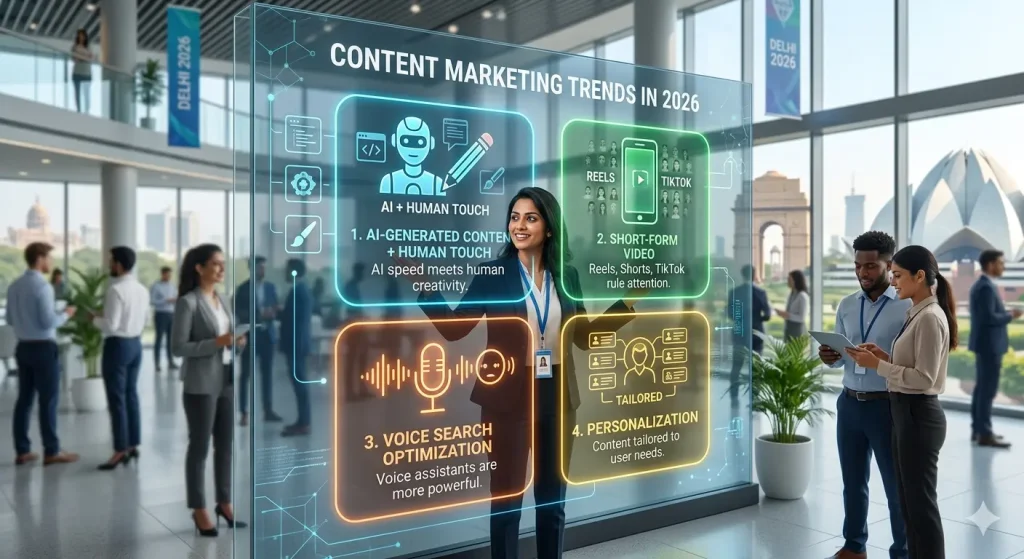
To stay ahead, follow these trends:
1. AI-Generated Content + Human Touch
AI helps with speed, but human creativity wins.
2. Short-Form Video Content
Reels, Shorts, TikTok dominate attention.
3. Voice Search Optimization
People are using voice assistants more than ever.
4. Personalization
Content tailored to user needs performs better.
Common Mistakes to Avoid
Avoid these mistakes if you want success:
- Ignoring SEO
- Posting without a strategy
- Inconsistent content
- Focusing only on selling
- Not analyzing performance
Consistency + strategy = success
Pro Tips for Faster Growth
Here are some expert tips:
- Focus on quality over quantity
- Repurpose content (blog → reel → post)
- Use storytelling
- Stay consistent for at least 3–6 months
- Learn from competitors
FAQs
What is a content marketing strategy in simple words?
A content marketing strategy is a plan to create and share useful content to attract the right audience and grow your business online. It focuses on providing value instead of direct selling.
How long does it take to see results?
Content marketing is a long-term game. Most websites start seeing noticeable results in 3 to 6 months, depending on competition, consistency, and content quality.
What type of content works best in 2026?
The most effective content types include:
- In-depth blog posts
- Short-form videos (Reels, Shorts)
- Tutorials and how-to guides
- Case studies and real results
Combining informational and engaging content gives the best results.
Is SEO necessary for content marketing?
Yes, SEO is essential. Without search engine optimization, your content may not reach the right audience. Proper use of keywords, headings, and internal linking improves visibility on Google.
How often should I publish content?
It depends on your capacity, but consistency matters more than frequency.
1–2 high-quality posts per week is better than posting daily low-quality content.
Can I use AI for content creation to make up for the content marketing strategy?
Yes, AI can help with research and drafting, but adding a human touch, personal insights, and real examples is crucial for better engagement and trust.
How do I measure content performance?
You can track performance using tools like:
- Google Analytics (traffic & behavior)
- Search Console (keyword rankings)
Focus on metrics like organic traffic, engagement rate, and conversions.
For more info – go to Content marketing strategy
Conclusion
Building a successful online presence in 2026 isn’t about shortcuts—it’s about consistency, value, and smart execution. A well-planned content marketing approach helps you connect with your audience, answer their questions, and guide them toward taking action.
Instead of chasing quick results, focus on creating high-quality, user-focused content that solves real problems. Whether you’re writing blog posts, creating videos, or posting on social media, your goal should always be to educate, engage, and build trust.
Remember, growth doesn’t happen overnight. Most successful brands spend months refining their content strategy, SEO optimization, and audience targeting. If you stay consistent and keep improving based on data, your traffic and conversions will grow steadily.
Another key factor is adaptability. Digital trends change quickly—what works today may not work tomorrow. Keep experimenting with content formats, distribution channels, and marketing techniques to stay ahead of your competitors.
Start small, stay consistent, and focus on delivering value. Over time, your content will become your biggest asset—bringing in traffic, leads, and sales on autopilot.
Pingback: Organic Traffic Growth Strategy in 2026 | Start Now