
Table of Contents
- What Is Organic Traffic Growth?
- Why Organic Traffic Matters in 2026
- How Search Engines Rank Websites
- Build a Strong SEO Foundation
- Keyword Research for Organic Growth
- Create High-Quality Content
- On-Page SEO Best Practices
- Technical SEO for Better Rankings
- The Power of Internal Linking
- Build High-Quality Backlinks
- Optimize for Mobile Users
- Improve User Experience and Engagement
- Use Social Media to Support SEO
- Track and Analyze SEO Performance
- Common Organic Traffic Mistakes to Avoid
- Future of Organic Traffic Growth
- Conclusion
What Is Organic Traffic Growth?
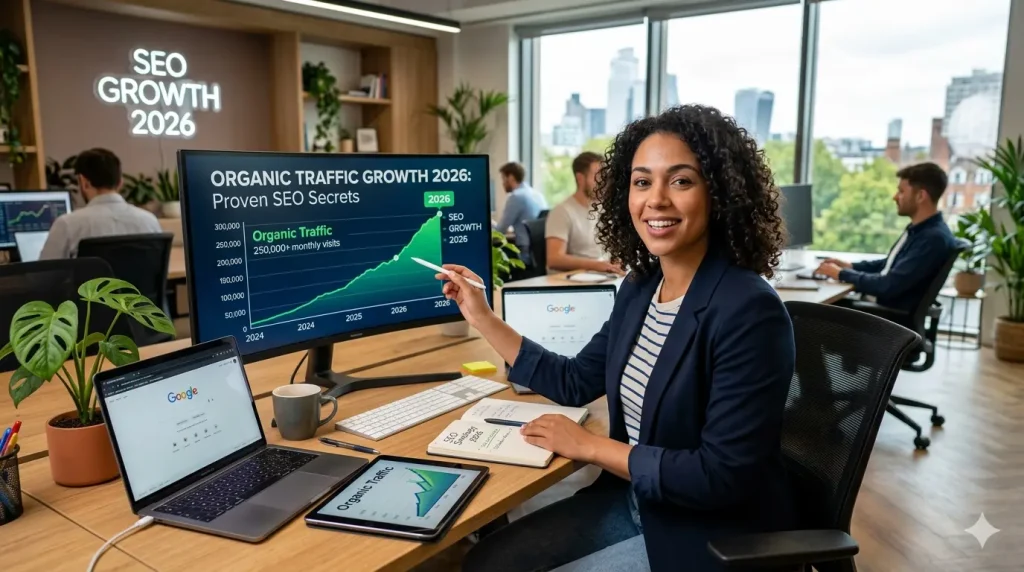
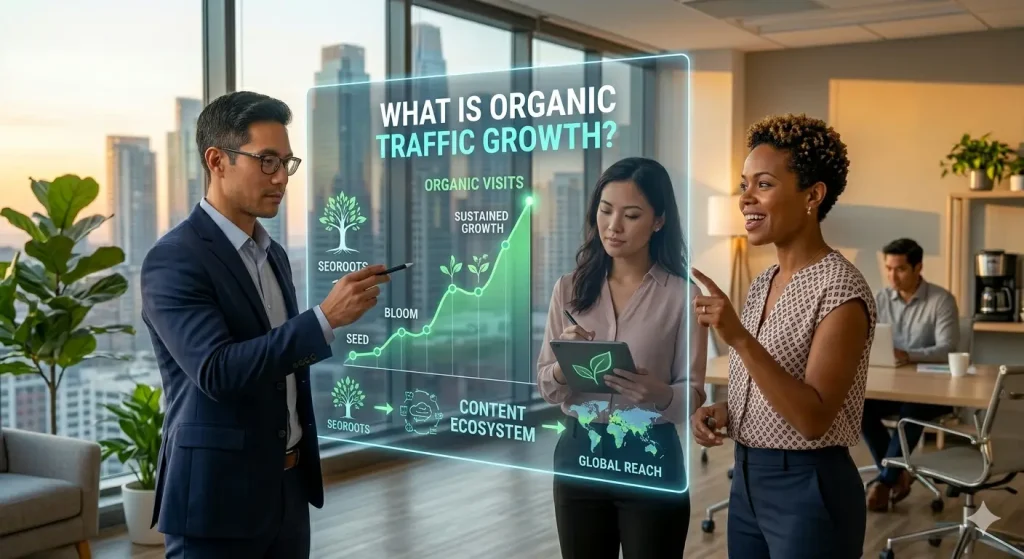
Organic Traffic Growth means increasing the number of visitors coming to your website naturally through search engines like Google without paying for ads. When users search for information, products, or services and click on your website from search results, that is called organic traffic.
In 2026, businesses are focusing more on organic traffic because it delivers long-term results, builds trust, and improves brand authority. Unlike paid advertising, organic traffic continues to grow when your website has quality content and strong SEO optimization.
For websites like digigospirit.in, organic traffic can become one of the biggest sources of leads, visibility, and online business growth.
Why Organic Traffic Matters in 2026
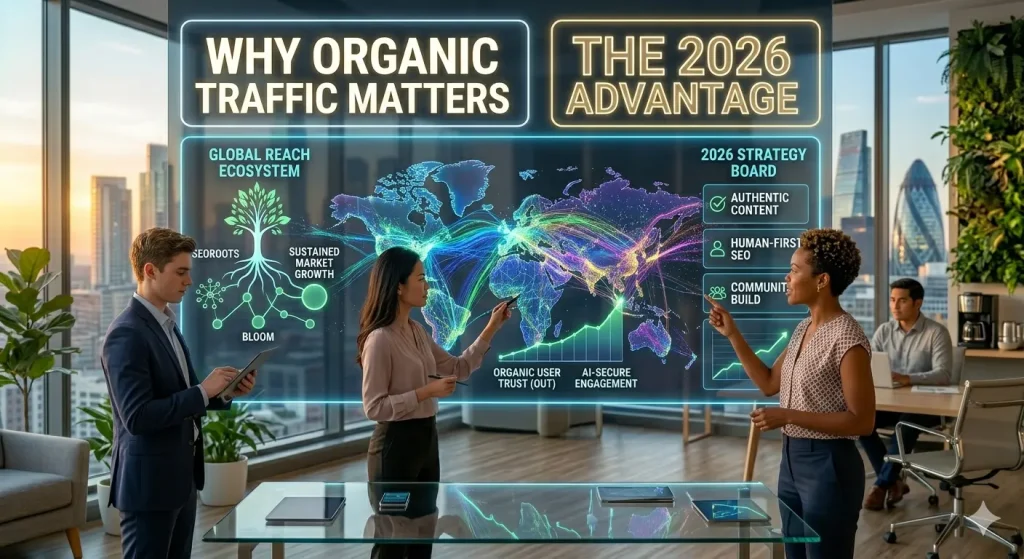
Digital competition is increasing every day. Thousands of websites are published daily, and ranking on the first page of search engines has become more competitive than ever. Organic traffic helps businesses stand out by reaching users who are actively searching for solutions.
Benefits of Organic Traffic Growth
Long-Term Results
SEO-driven traffic continues even after content is published. A well-ranked blog can bring visitors for years.
Better Trust and Credibility
Users trust websites that appear organically in search engine results more than paid ads.
Higher Conversion Rates
Organic visitors usually search with intent, making them more likely to convert into customers.
Cost-Effective Marketing
Organic SEO strategies reduce dependency on expensive advertising campaigns.
How Search Engines Rank Websites
Search engines use algorithms to understand and rank websites based on quality and relevance. They analyze multiple factors before deciding which pages deserve higher rankings.
Important Ranking Factors
- Content quality
- Keyword relevance
- Website speed
- Mobile responsiveness
- User experience
- Backlink quality
- Website authority
- Internal linking structure
Search engines now prioritize websites that provide useful, trustworthy, and user-focused content.
Build a Strong SEO Foundation
Before focusing on traffic growth, your website must have a strong SEO foundation. Without proper optimization, even good content may struggle to rank.
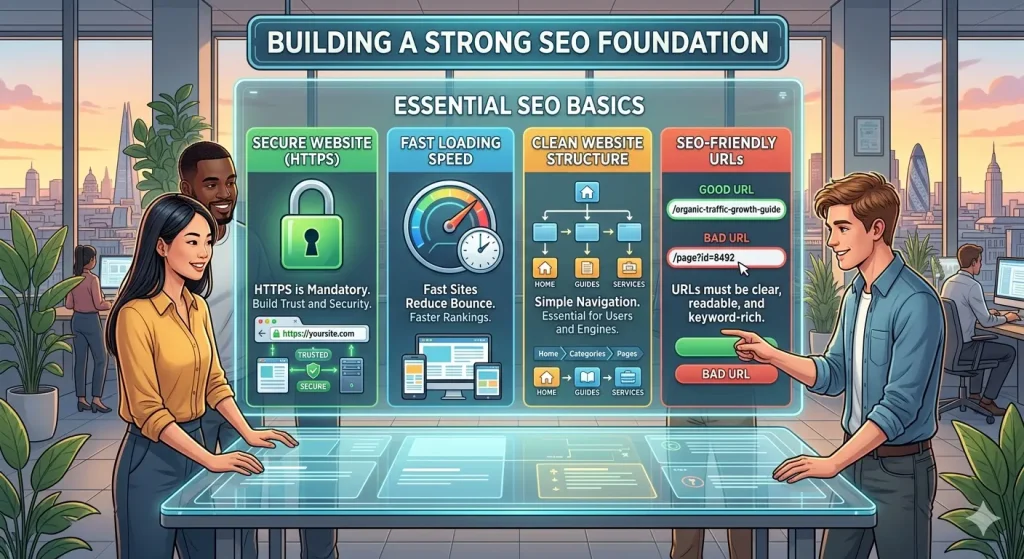
Essential SEO Basics
Secure Website
Your website should use HTTPS for security and trust.
Fast Loading Speed
Slow websites increase bounce rates and reduce rankings.
Clean Website Structure
A simple navigation system helps both users and search engines.
SEO-Friendly URLs
URLs should be short, readable, and include target keywords naturally.
Example:
- Good URL:
/organic-traffic-growth-guide - Bad URL:
/page?id=8492
Keyword Research for Organic Growth
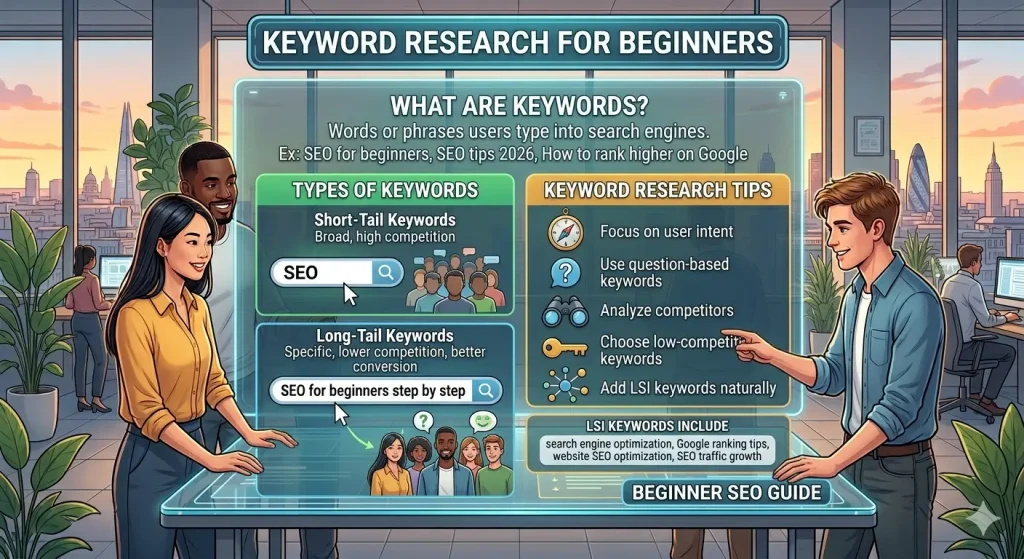
Keyword research is one of the most important parts of SEO. It helps you understand what people are searching for online.
Types of Keywords
Short-Tail Keywords
These are broad keywords with high competition.
Example:
- Organic traffic
Long-Tail Keywords
These are more specific and easier to rank for.
Example:
- Organic traffic growth strategies for small businesses
Long-tail keywords often bring more targeted traffic and better conversions.
Best Keyword Research Tips
- Focus on user intent
- Analyze competitors
- Use low-competition keywords
- Include question-based searches
- Target trending search topics
LSI keywords such as SEO growth, website traffic increase, search engine optimization, content marketing strategy, and Google ranking improvement should also be added naturally throughout the content.
Create High-Quality Content
Content remains the heart of organic traffic growth. Search engines prioritize valuable content that answers user questions effectively.
Characteristics of High-Quality Content
Informative
Content should solve problems and provide real value.
Easy to Read
Use short paragraphs, headings, and simple language.
Original
Avoid copied or duplicate content.
Updated
Refresh older content regularly with new information.
Engaging
Use examples, statistics, visuals, and practical tips.
Long-form blog posts generally perform better because they cover topics in depth and improve user engagement.
On-Page SEO Best Practices
On-page SEO helps search engines understand your content properly.
Optimize Title Tags
Your title should:
- Include the focus keyword
- Use emotional or power words
- Stay within character limits
Use Proper Headings
Structure content using:
- H1 for the main title
- H2 for major sections
- H3 for subtopics
Optimize Meta Descriptions
A strong meta description increases click-through rates by encouraging users to visit your page.
Add Keywords Naturally
Avoid keyword stuffing. Use the focus keyword naturally within:
- Introduction
- Headings
- Content body
- Image alt text
- Conclusion
Technical SEO for Better Rankings
Technical SEO improves how search engines crawl and index your website.
Important Technical SEO Elements
XML Sitemap
Helps search engines discover your pages faster.
Robots.txt
Controls which pages search engines can access.
Mobile Optimization
Most users now browse on smartphones, making mobile SEO critical.
Core Web Vitals
Search engines evaluate:
- Loading speed
- Visual stability
- Interactivity
Improving these factors can significantly increase rankings and user satisfaction.
The Power of Internal Linking
Internal links connect one page of your website to another. They improve navigation and help distribute SEO authority across your site.
Benefits of Internal Linking
- Improves page indexing
- Increases user engagement
- Reduces bounce rate
- Helps search engines understand content structure
For example, if you write blogs about digital marketing, SEO, and content marketing, linking them together creates stronger topical authority.
Build High-Quality Backlinks
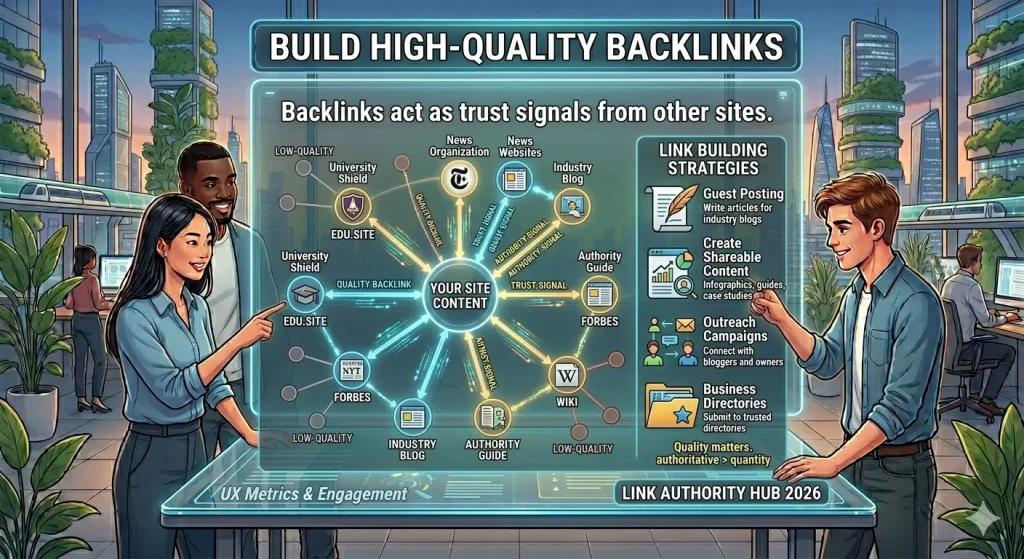
Backlinks are links from other websites pointing to your content. They act as trust signals for search engines.
Effective Link Building Strategies
Guest Posting
Write articles for relevant industry blogs.
Create Shareable Content
Infographics, guides, and case studies attract backlinks naturally.
Outreach Campaigns
Connect with bloggers and website owners.
Business Directories
Submit your website to trusted directories.
Quality matters more than quantity. A few strong backlinks from authoritative websites are better than hundreds of low-quality links.
Optimize for Mobile Users
Mobile optimization is critical for Organic Traffic Growth in 2026.
Mobile SEO Tips
- Use responsive design
- Optimize images
- Improve loading speed
- Use readable font sizes
- Avoid intrusive popups
A mobile-friendly website improves rankings, engagement, and Organic Traffic Growth.
Improve User Experience and Engagement
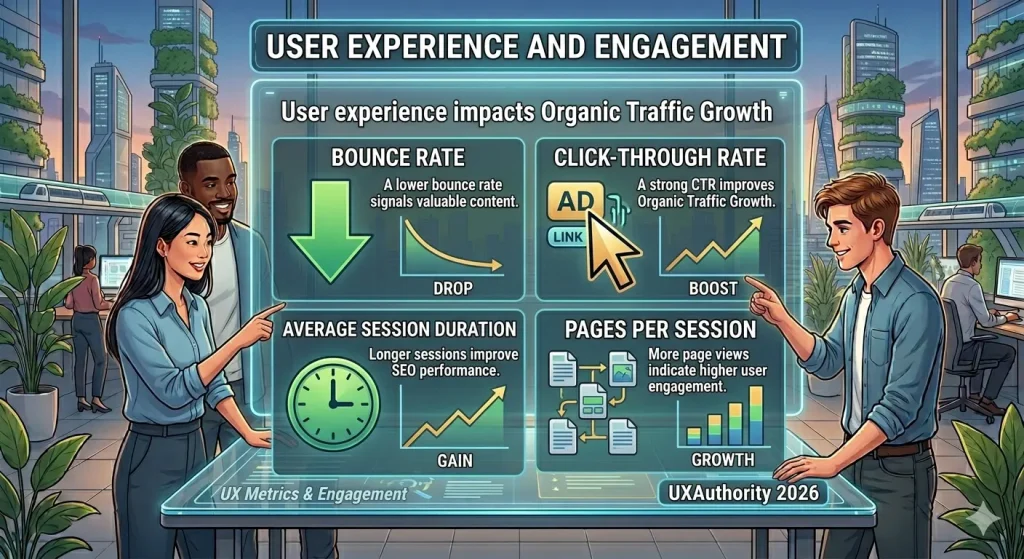
User experience directly impacts Organic Traffic Growth because search engines analyze how users interact with your website.
Key Engagement Metrics
Bounce Rate
Shows how quickly users leave your site.
Average Session Duration
Measures how long users stay on your pages.
Click-Through Rate
Tracks how many users click your search result.
Pages Per Session
Indicates how deeply users explore your website.
Improving user experience increases website authority and Organic Traffic Growth.
Use Social Media to Support SEO
Social media platforms help increase website visibility and support Organic Traffic Growth indirectly.
Best Social Media Strategies
- Share blog posts consistently
- Use trending hashtags
- Create short-form video content
- Engage with followers
- Promote valuable resources
Platforms like Instagram, LinkedIn, and Facebook can help drive traffic to your website and improve brand awareness.
Track and Analyze SEO Performance
SEO success requires continuous monitoring and improvement.
Important SEO Tools
- Google Analytics
- Google Search Console
- Ahrefs
- SEMrush
Metrics to Monitor
- Organic traffic
- Keyword rankings
- Click-through rate
- Backlinks
- Bounce rate
- Conversion rates
Consistent monitoring helps improve Organic Traffic Growth strategies over time.
Common Organic Traffic Mistakes to Avoid
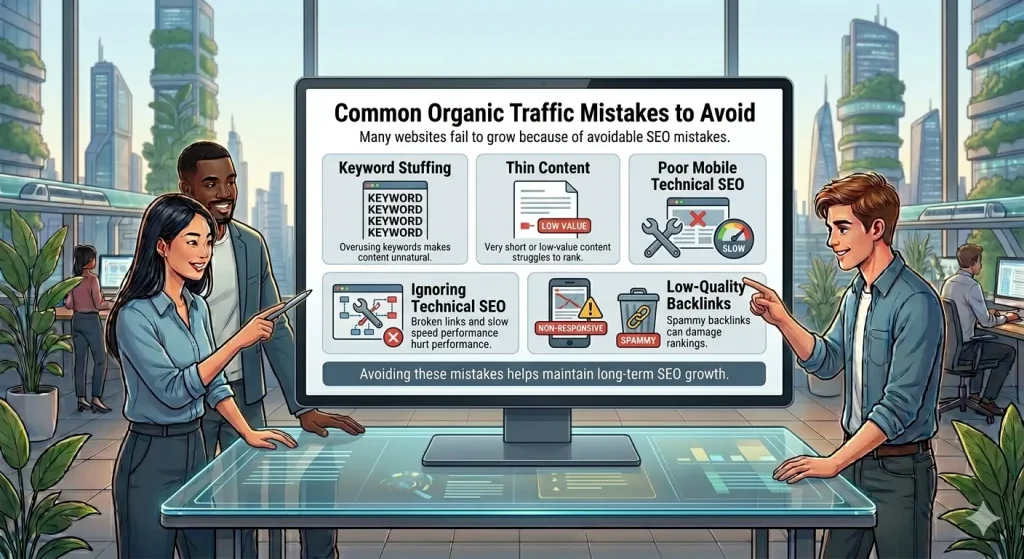
Many websites fail to grow because of avoidable SEO mistakes.
Common Errors
Keyword Stuffing
Overusing Organic Traffic Growth unnaturally can harm rankings.
Thin Content
Very short or low-value content struggles to rank.
Ignoring Technical SEO
Broken links and slow speed hurt performance.
Poor Mobile Experience
Non-responsive websites lose traffic.
Low-Quality Backlinks
Spammy backlinks can damage rankings.
Avoiding these mistakes helps maintain long-term SEO growth.
Future of Organic Traffic Growth
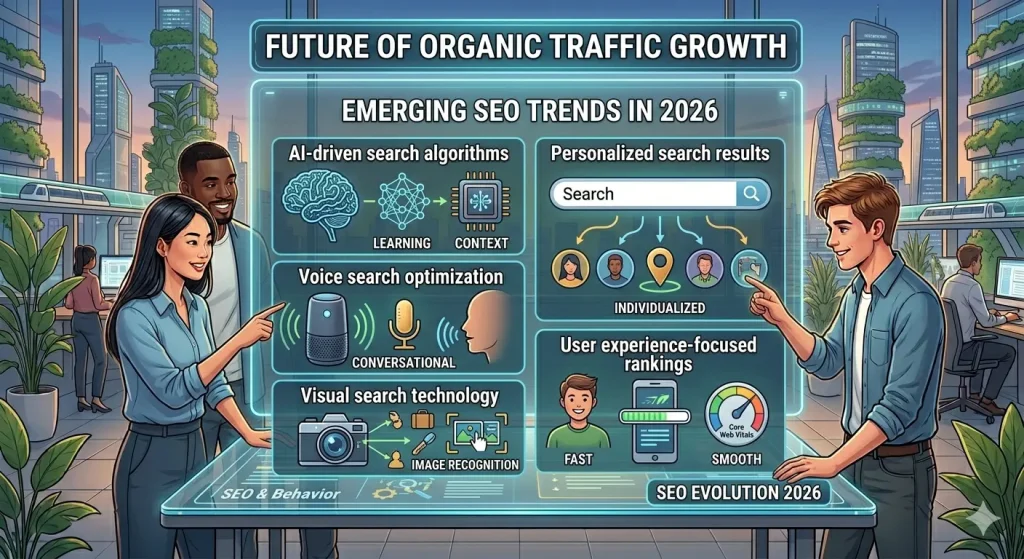
SEO continues to evolve with advancements in artificial intelligence and user behavior to improve organic traffic growth.
Emerging SEO Trends in 2026
- AI-driven search algorithms
- Voice search optimization
- Visual search technology
- Personalized search results
- User experience-focused rankings
Businesses adapting early to these trends can achieve stronger Organic Traffic Growth and competitive advantages.
For more interesting content, go to organic traffic growth
Conclusion
Organic Traffic Growth is one of the most powerful digital marketing strategies for long-term online success. By focusing on SEO optimization, high-quality content, technical improvements, and user experience, websites can achieve consistent growth without relying heavily on paid advertising.
For websites like digigospirit.in, implementing smart SEO strategies can improve visibility, attract targeted visitors, and build lasting authority in digital marketing.
The key to success is consistency. Publish valuable content regularly, optimize every page properly, and continuously improve your website experience. Over time, these efforts can generate sustainable organic traffic and business growth.
FAQs
What is Organic Traffic Growth?
Organic Traffic Growth means increasing the number of visitors to your website naturally through search engines like Google without using paid ads.
Why is Organic Traffic important for websites?
Organic traffic helps improve brand visibility, builds trust, increases website authority, and generates long-term traffic without spending continuously on advertising.
How long does Organic Traffic Growth take?
SEO results usually take between 3 to 6 months depending on competition, content quality, website authority, and SEO consistency.
Can social media improve Organic Traffic Growth?
Yes, social media platforms help increase content visibility, attract visitors, and improve brand awareness, which can indirectly support SEO growth.
Is Organic Traffic better than paid traffic?
Organic traffic is more cost-effective for long-term growth, while paid traffic provides faster short-term results. Combining both strategies often works best.
What type of content ranks best for organic traffic?
Long-form, informative, and user-focused content usually performs best because it answers search intent more effectively and increases engagement.